

Table of Contents
Introduction
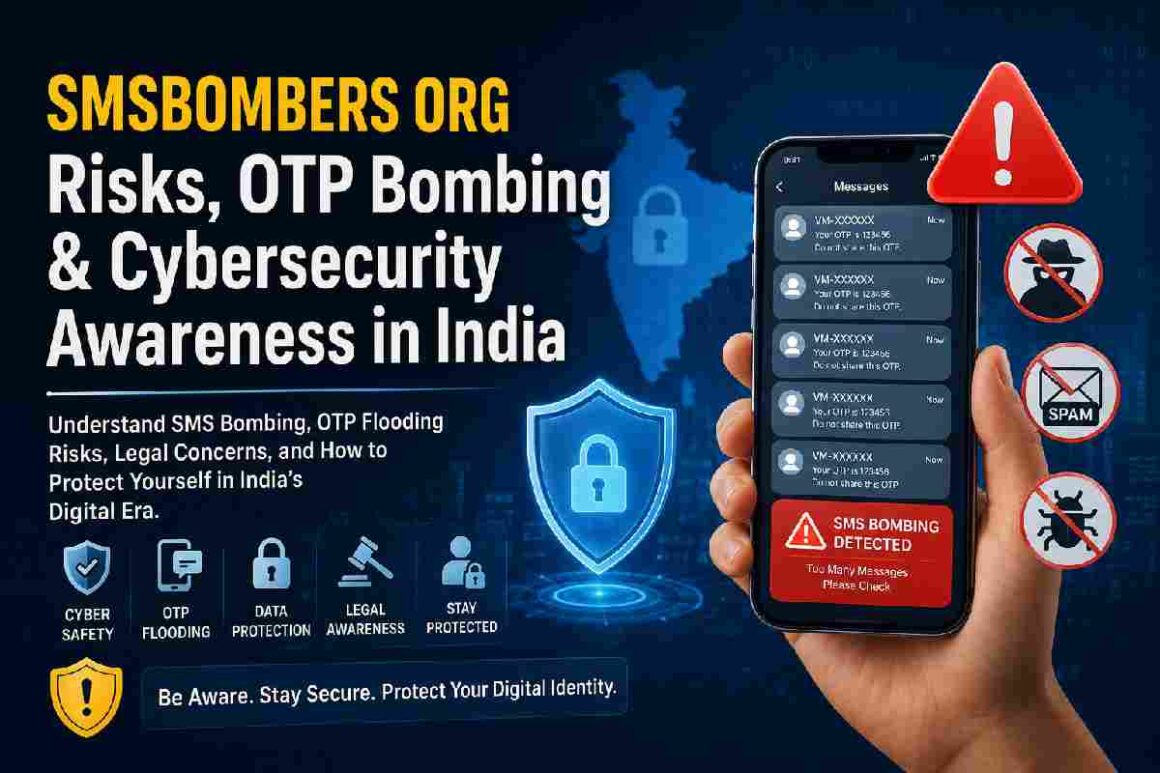
The rise of digital communication has made mobile phones an important part of modern life. From banking OTPs and UPI verification codes to shopping alerts and business communication. The SMS services are deeply connected with India’s digital ecosystem. However, alongside legitimate communication systems, cyber misuse methods such as SMS bombing have also gained online attention. This has increased searches related to smsbombers org, a term associated with bulk SMS flooding tools and OTP bombing discussions.
SMS bombing signifies to the practice of transfer a enormous number of text messages or OTP requests to a solitary phone number within a short dated. Such activity can disturb device custom, create misperception, and sometimes provision phishing or cheat attempts. Cybersecurity specialists increasingly caution users near the risks related with SMS bombing services and OTP submerging attacks.
In India, where digital expenses and OTP-based confirmation schemes are seriously used, consciousness around SMS bombing has developed gradually significant. Users are now pointed for information nearby online SMS submerging platforms, cybersecurity pressures, telecom misapplication, and prevention policies.
What is SMSBombers org?
Smsbombers org is commonly discussed online as a platform or keyword associated with SMS flooding tools and OTP bombing activities. Such tools are usually described as systems that repeatedly trigger SMS or OTP requests toward a specific mobile number.
Many websites speaking smsbombers org label it as a prank or bulk messaging tool, but cybersecurity specialists caution that repeated unwanted messaging may lead to pestering, service disturbance, and legal penalties.
The cumulative online conspicuousness of these terms replicates rising public interest in cybersecurity awareness, digital exploitation prevention, and telecom security.
How SMS Bombing Works
SMS bombing generally works by automating message requests through APIs, online forms, or bulk messaging systems.
OTP Flooding
One common method involves repeatedly triggering OTP requests from shopping apps, payment services, and login systems. Victims may suddenly receive hundreds of OTP messages within minutes.
Bulk Messaging Systems
Some tools automate multiple SMS requests using telecom APIs or online verification systems.
Spam and Disruption
The box is often to overpower the target’s inbox, sidetrack them, or create inopportuneness.
Scam Alteration Techniques
Cybersecurity discussions indicate that OTP flooding is sometimes used alongside fraud attempts to confuse users during phishing or financial scams.
Why SMS Bombing is Becoming a Cybersecurity Concern in India
India’s growing digital economy has increased reliance on mobile authentication systems.
| Digital Activity | SMS Usage Importance | Risk During SMS Bombing |
| UPI Transactions | OTP verification | Missed security alerts |
| Banking Services | Login authentication | Confusion and phishing risk |
| E-commerce Apps | Order confirmations | Notification overload |
| Social Media Apps | Verification codes | Account access disruption |
| Telecom Services | User verification | Service interruption |
Experts believe OTP flooding attacks can distract victims from genuine banking alerts and security warnings.
How SMSBombers org Reflects Digital Abuse Trends
The online discussions around smsbombers org highlight broader concerns related to digital misuse and cyber harassment.
Increase in OTP Spam
Many Indian users report receiving large numbers of random OTP messages from multiple services. Reddit discussions frequently mention OTP bombing as a prank or harassment tactic.
Cyber Harassment Concerns
Repeated unsolicited messaging can create stress, panic, and disruption for victims.
Telecom Infrastructure Abuse
Telecom networks are designed for legitimate communication, and abuse of SMS infrastructure can impact system efficiency.
Phishing and Fraud Risks
Cybersecurity researchers note that SMS flooding attacks may accompany financial scams or phishing attempts.
Comparison Between Legitimate Bulk Messaging and SMS Bombing
| Feature | Legitimate Bulk Messaging | SMS Bombing |
| Purpose | Marketing and notifications | Harassment or disruption |
| User Consent | Usually permission-based | Unsolicited |
| Legal Compliance | Regulated | Potentially unlawful |
| Message Frequency | Controlled | Excessive flooding |
| Telecom Approval | Authorized systems | Misuse of systems |
Legitimate businesses use regulated SMS gateways with user consent, while SMS bombing activities are generally associated with unauthorized mass messaging behavior.
Legal Concerns Around SMS Bombing in India
Cybersecurity and telecom experts warn that SMS flooding activities may violate Indian digital communication laws.
Telecom Misuse
Using telecom infrastructure for harassment or repeated unsolicited communication may trigger legal scrutiny.
IT Act Implications
Certain cyber harassment and digital misuse activities can potentially fall under provisions of India’s Information Technology Act.
Privacy Violations
Repeated targeting of phone numbers without consent may raise privacy concerns.
Traceability Issues
Many users wrongly assume anonymity online guarantees protection. However, IP addresses, usage logs, and device metadata can often be traced.
Common Risks Associated With SMSBombers org
Cybersecurity experts highlight several risks linked with SMS flooding platforms.
Device Disruption
Large volumes of incoming messages can slow devices, consume battery life, and interrupt regular communication.
Psychological Stress
Continuous message flooding can create anxiety and confusion for victims.
Data Privacy Risks
Some unofficial platforms may collect user data, IP addresses, or browsing information.
Malware and Phishing Threats
Cybersecurity articles warn that questionable SMS bombing websites may expose users to malicious scripts or phishing risks.
Comparison of Major Cyber Threats Related to SMS Systems
| Cyber Threat | Main Objective | Risk Level |
| SMS Bombing | Message flooding | High |
| OTP Phishing | Stealing verification codes | Very High |
| SIM Swap Fraud | Hijacking mobile numbers | Very High |
| Spam Messaging | Marketing abuse | Moderate |
| Fake Banking SMS | Financial fraud | Extremely High |
India’s rapid digital payment growth has increased the importance of secure SMS authentication systems.
Real User Experiences and Online Discussions
Online communities frequently discuss OTP flooding incidents and random SMS attacks.
Reddit Discussions About OTP Flooding
Several Indian Reddit users describe receiving dozens or hundreds of OTP messages unexpectedly. Some discussions suggest these incidents may be pranks, while others warn about scam attempts.
Cybersecurity Community Awareness
Cybersecurity forums increasingly discuss SMS bombing as a digital harassment issue rather than harmless entertainment.
Banking Scam Concerns
Indian online communities have also warned users about OTP fraud schemes combined with call spoofing and fake verification requests.
How Users Can Protect Themselves From SMS Bombing
Cybersecurity experts recommend several protective measures for users facing OTP flooding or SMS spam attacks.
Avoid Sharing OTPs
Never share OTPs with unknown callers, even if they claim to represent banks or payment services.
Enable Spam Filters
Modern smartphones include spam filtering and message blocking options.
Contact Telecom Providers
Users experiencing severe SMS flooding should report incidents to telecom service providers.
Strengthen Account Security
Using app-based authenticators and multi-factor authentication can reduce dependence on SMS verification alone.
Avoid Unknown Links
Users should never click distrustful links received during junk or OTP flooding attacks.
Role of Telecom Companies in Stopping SMS Abuse
Telecom providers and digital stages are increasingly implementing precautions against SMS exploitation.
Rate Limiting Schemes
Many businesses now restrict repeated OTP requirements from the same maneuver or IP address.
CAPTCHA Authentication
Websites increasingly use CAPTCHA systems to decrease automated junk activity.
AI Spam Discovery
Artificial intelligence schemes are refining spam discovery and suspicious movement monitoring.
Regulatory Obedience
Telecom providers function under government guidelines designed to reduce spam communication and cyber misapplication.
Cybersecurity Alertness in India
India’s rising internet user base has enlarged demand for cybersecurity instructions and digital safety responsiveness.
Expansion of Digital Payments
UPI and mobile banking growth have made cybersecurity awareness essential for everyday users.
Increase in Online Fraud Awareness
People are increasingly knowledge about phishing, OTP scams, and telecom deception through digital alertness campaigns.
Growth of Cybersecurity Negotiations
Online societies and news reports frequently discuss cybercrime trends and digital safety approaches.
Position of Digital Responsibility
Experts highlight that digital tools should be used sensibly and ethically to avoid mismanagement and damage.
Future of SMS Security and Digital Verification
Technology companies are gradually improving authentication systems to reduce reliance on vulnerable SMS verification methods.
Biometric Authentication
Fingerprint and facial recognition systems are becoming more common for secure logins.
App-Based Authentication
Authenticator apps provide safer alternatives to SMS-based OTP systems.
AI Fraud Detection
Artificial intelligence is improving fraud detection and suspicious behavior analysis.
Advanced Telecom Security
Telecom operators continue investing in spam filtering and fraud prevention systems.
Researchers also continue studying OTP vulnerabilities and authentication security to strengthen digital systems.
Conclusion
Smsbombers org reflects growing public awareness around SMS bombing, OTP submerging, cybersecurity threats, and telecom misuse in India’s expanding digital ecosystem. Some people may view SMS flooding tools as harmless pranks, cybersecurity experts gradually warn about the risks associated with harassment, phishing, service disruption, and fraud.
India’s digital budget depends intensely on secure SMS verification schemes for banking, UPI payments, e-commerce, and communication amenities. As cyber pressures grow, users must remain cautious about OTP cheats, suspicious songs, spam attacks, and online scam techniques.
The upcoming upcoming of digital safety in India will aim on AI-based fraud prevention, biometric substantiation, secure confirmation systems, and hard telecom defenses to decrease cyber misapplication and recover online safety.